Table of Contents
Why Surveillance for Businesses Is Critical Today
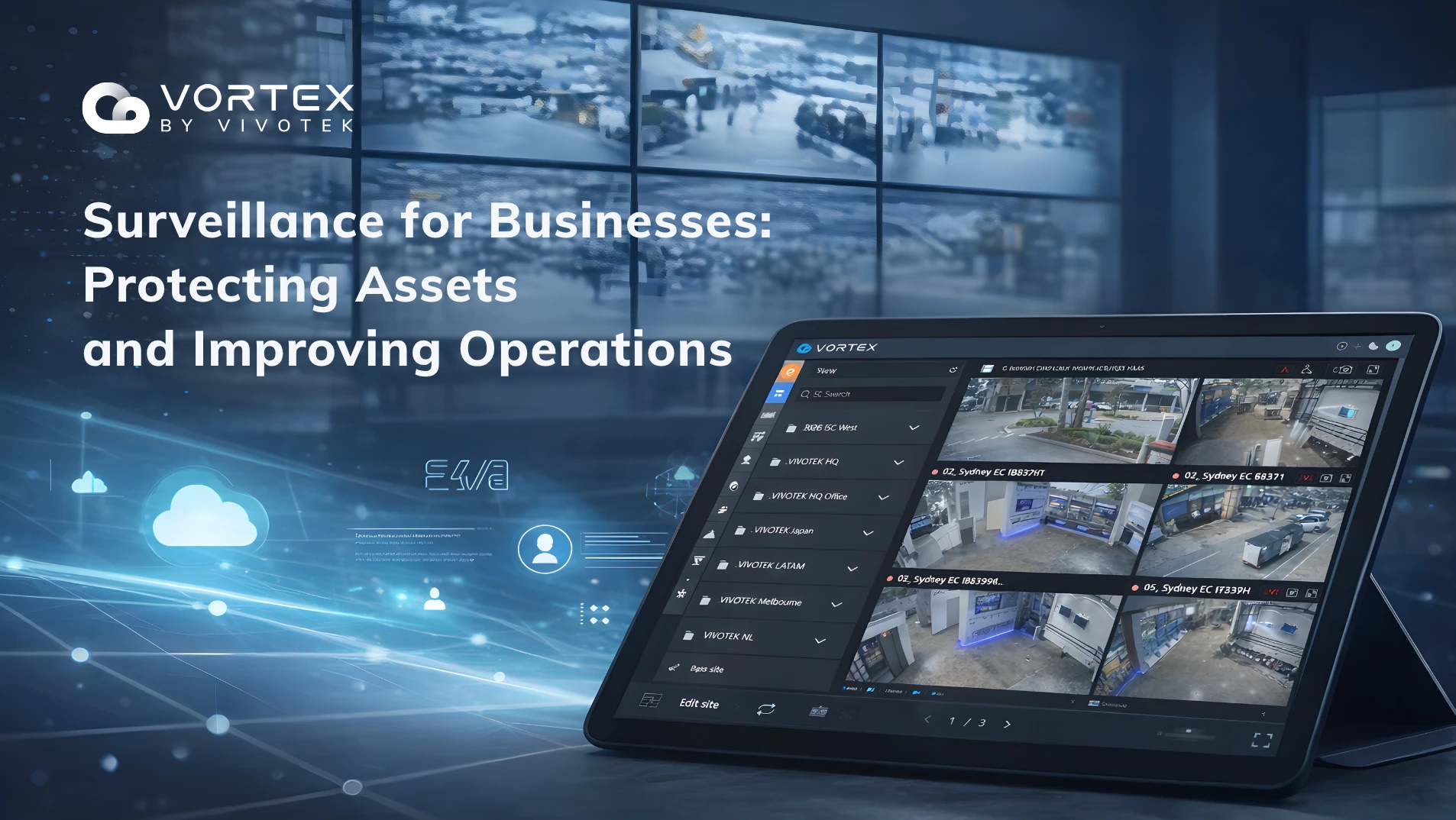
For many organizations, surveillance used to mean installing cameras, recording footage, and reviewing incidents only after something went wrong. That model is no longer enough. Today, surveillance for businesses is expected to do more than capture evidence. It increasingly helps organizations to improve security, support workplace safety, strengthen visibility across locations, and run daily operations more efficiently.
This shift also reflects a broader change in how organizations think about security. ASIS’s 2025 research found that many organizations increasingly view security as a business enabler rather than only a cost center. That changes how surveillance systems are evaluated: businesses are no longer asking only whether cameras can record incidents, but whether a system can help reduce risk, improve coordination, and support long-term operational efficiency.
Businesses today face more complex security and operational pressures than they did a decade ago. Loss prevention, employee safety, after-hours visibility, incident documentation, and multi-site oversight all compete for attention, often without a matching increase in staffing. As a result, business security cameras are no longer viewed only as passive recording tools. They are increasingly expected to help teams detect issues sooner, verify events faster, and respond with less manual effort.
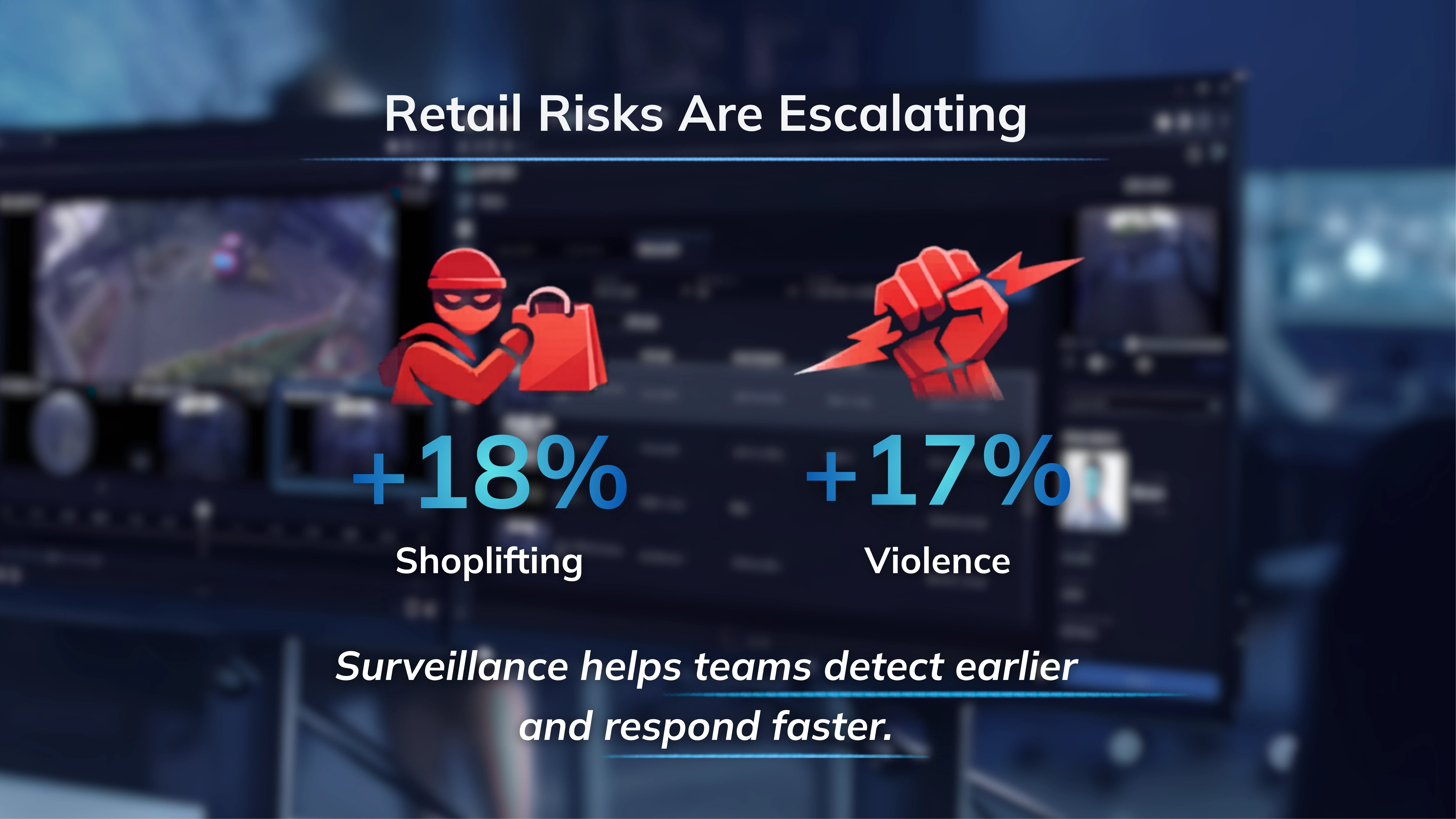
Retail is one clear example. In 2025, NRF reported that retailers saw an 18% increase in the average number of shoplifting incidents in 2024 compared with 2023, while threats or acts of violence during theft events rose 17% over the same period. In that kind of environment, surveillance is not just about post-incident evidence. It helps businesses improve situational awareness, support frontline staff, and strengthen day-to-day site control.
Types of Surveillance Systems for Businesses
Most business security camera systems today fall into three broad categories: analog CCTV, IP-based cameras, and cloud-based surveillance. Each model has its place, but the differences become more important as businesses scale, standardize across sites, or look for better long-term flexibility.
-
Analog CCTV systems are still familiar and workable for basic coverage, but they are generally more limited when it comes to remote access, expansion, and software-driven features.
-
IP-based security cameras are better suited to modern digital environments because they support network-based management, easier integration, and stronger image and data flexibility.
-
Cloud surveillance for businesses takes that evolution further by making centralized access, remote monitoring, and multi-site oversight easier to manage.
For many businesses, the best answer is not to choose one model in absolute terms. It is about choosing an architecture that fits current needs while supporting future growth. That is one reason hybrid cloud approaches continue gaining traction. They offer a practical modernization path for organizations that already have cameras installed and want to move forward without a full rip-and-replace project. For readers exploring this transition, a separate guide on upgrading existing cameras to cloud surveillance can provide more detail.
Benefits of Surveillance for Businesses
Modern business security cameras create value in three closely connected ways: stronger security, safer workplaces, and better operational efficiency. These benefits should not be viewed as separate priorities in competition with one another. In practice, they often reinforce each other.
-
From a security perspective, cameras can deter misconduct, support faster incident review, and help teams verify what happened during disputes, emergencies, or suspicious activity.
-
From a safety and prevention perspective, surveillance can also help organizations monitor the environment more proactively, identify hazards earlier, and support safer working conditions. In environments such as retail floors, warehouses, entrances, loading zones, parking areas, and production spaces, video systems can contribute not only to incident confirmation, but also to risk awareness, unsafe behavior detection, and preventive response before a small issue becomes a larger one.
-
From an operational perspective, modern systems can reduce repetitive manual monitoring, improve oversight across sites, and help managers respond more quickly without always being on-site.
That is why businesses increasingly evaluate surveillance not just as a security tool, but as a system that supports protection, safety, prevention, and performance at the same time.
Measuring ROI on Surveillance Systems
When businesses think about surveillance ROI, they often start with a simple question: Does the system help reduce theft, loss, or incident-related costs? That is a valid starting point, but it is no longer the full picture. For modern surveillance systems, ROI should also include faster investigations, reduced manual review time, stronger site visibility, and better coordination across teams and locations. It can also include the added value created when surveillance data is easier to integrate with alerts, reporting workflows, access management, or other operational systems.
A practical way to think about ROI is to separate direct gains from indirect gains. Direct gains may include loss reduction, fewer disputes, lower incident response costs, or avoided downtime. Indirect gains often come from saved labor hours, easier multi-site management, faster reporting, better operational oversight, and more useful cross-system workflows that reduce friction in daily operations.
For a deeper look at how organizations are connecting surveillance to business value, explore the IDC infographic “The Hidden ROI of Surveillance.”

Use Cases of Surveillance for Businesses Across Industries
The value of surveillance becomes easier to understand when viewed in real operating environments. While the core goals may be similar across industries, the way surveillance supports security, safety, and efficiency can vary significantly depending on the site, workflow, and risk profile.
-
In property management, workplaces, campuses, and other commercial sites, surveillance supports much more than theft deterrence.
In these environments, video surveillance systems for business help improve visibility across shared spaces, verify incidents faster, and strengthen workplace and campus safety. It can also support more integrated workflows when connected with systems such as access control, alarms, intercoms, or emergency response processes—helping security, operations, and facility teams coordinate more effectively. -
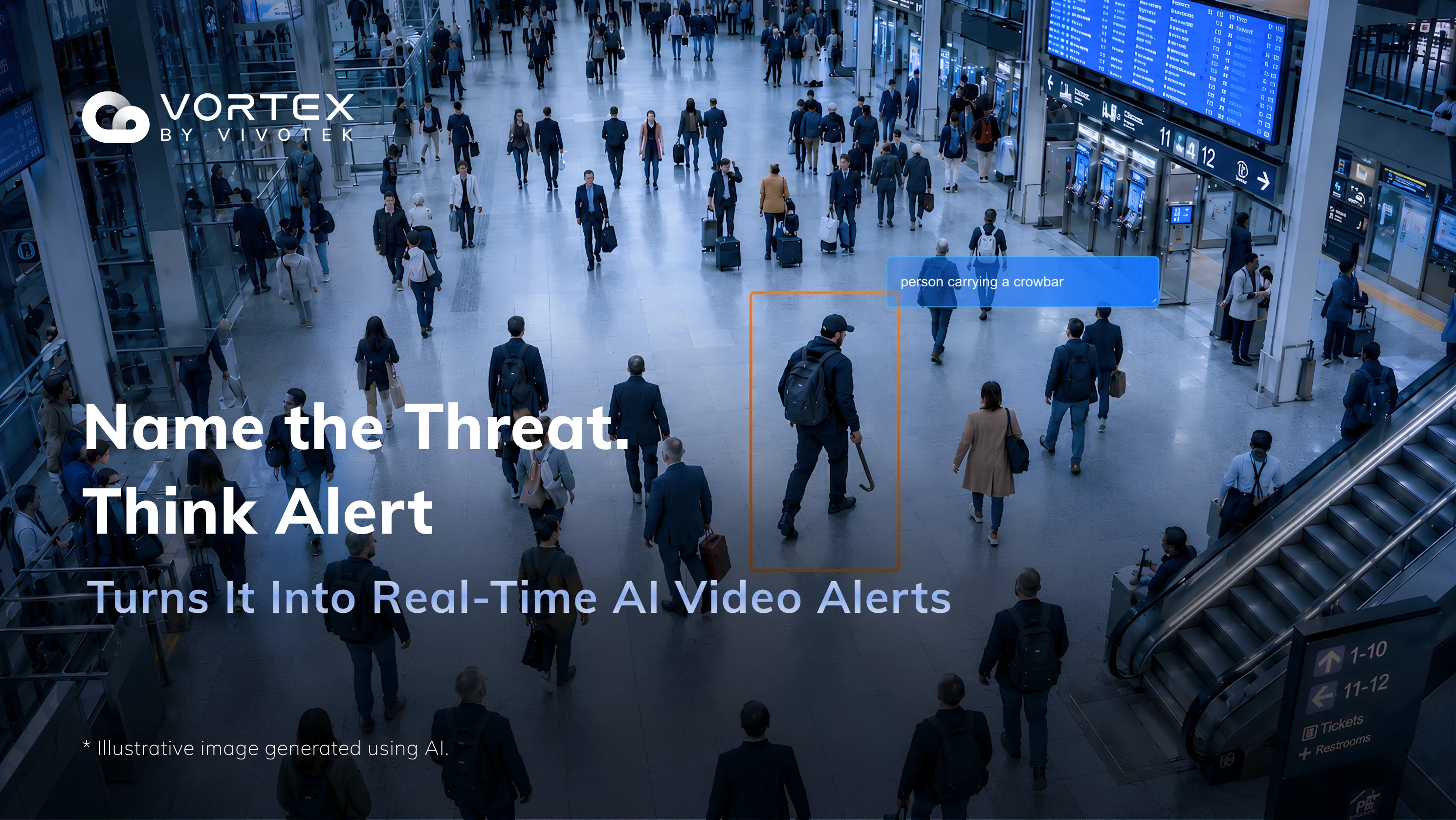
In retail and QSR multi-store businesses, business owners want to improve central oversight, reduce the burden on local staff, and support faster response across locations. With the help of GenAI-based capabilities, natural language can now become a more practical way to work with video. Features such as VORTEX Think Search and Think Alert help teams search footage more intuitively and define the situations they want to monitor in a more flexible way. The 85°C Bakery Cafe in the U.S. case reflects this well: by using a hybrid cloud architecture that connects legacy and cloud security cameras on one platform, the team improved centralized management, accelerated deployment, and responded to incidents more efficiently without requiring a full system replacement.
-
In manufacturing and warehousing, surveillance is closely tied to both operational control and worker safety. AI surveillance systems for business can help monitor workflows, loading areas, restricted zones, and site-wide movement, while also supporting safer environments through functions such as Fall Detection and PPE Detection. These capabilities help teams identify potential incidents earlier, reinforce compliance expectations, and respond faster when something goes wrong.
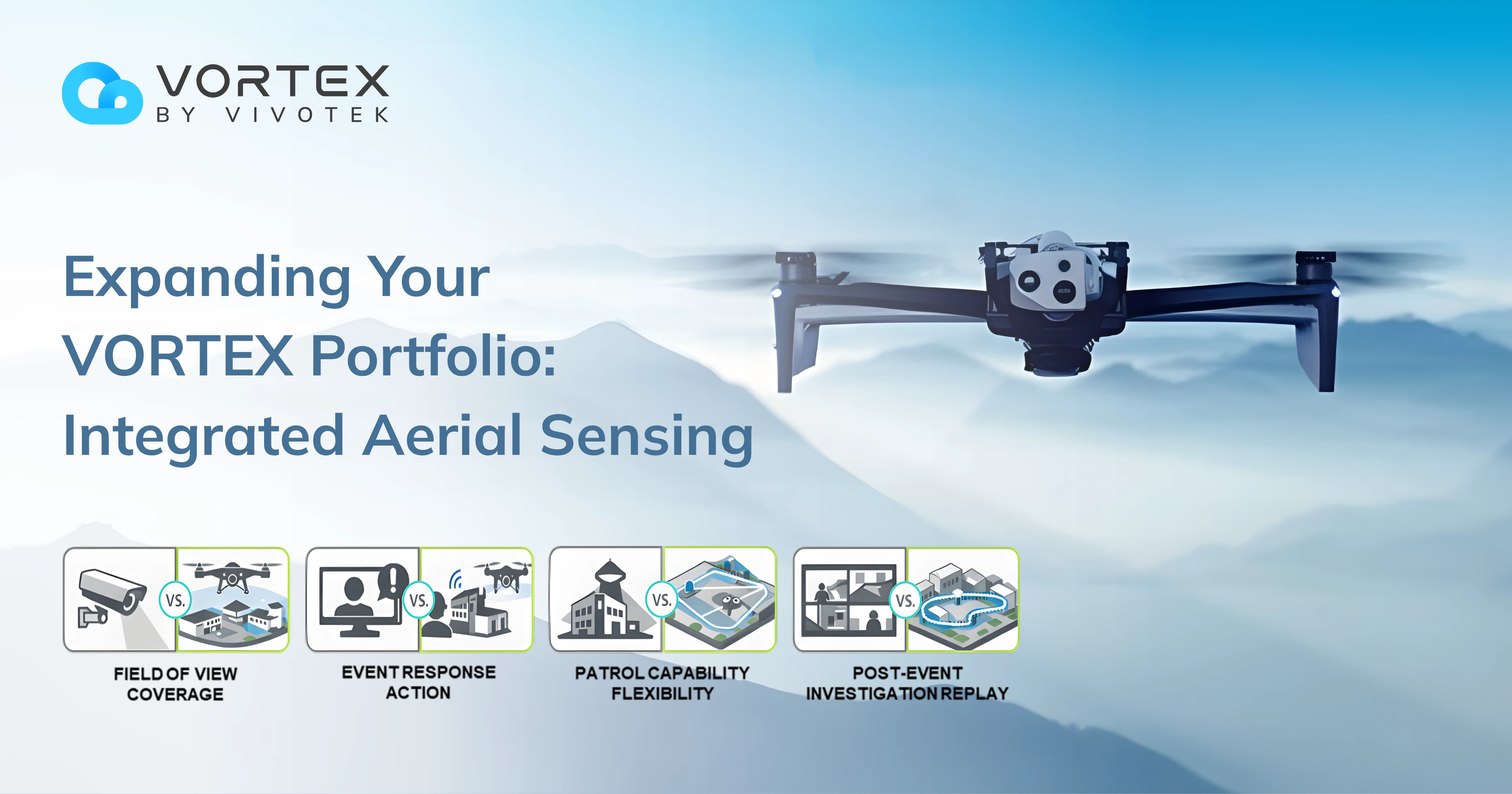
As cloud surveillance continues to evolve, newer applications are beginning to integrate robots and drones as mobile inspection endpoints. This helps extend visibility beyond fixed cameras and creates a more unified workflow for inspections, monitoring, and response across both ground and aerial operations. For more on this direction, see VORTEX’s overview of drone and robot inspection applications.
Key Considerations for Choosing a Surveillance System
Before choosing security cameras and a surveillance system, businesses should start with a simple checklist:
How many sites need to be managed now, and how many may be added later?
✔ What kinds of spaces need coverage, such as entrances, offices, sales floors, warehouses, or parking areas?
✔ How long does footage need to be retained?
✔ Who needs remote access, and what level of permission should each role have?
✔ Is faster search, AI filtering, or real-time alerting important for daily operations?
✔ Does the business need to preserve part of its existing security camera infrastructure?
✔ Are cybersecurity, auditability, and privacy requirements already defined?
This kind of checklist helps organizations assess what they actually need before comparing vendors or features. It also prevents the common mistake of choosing a system based only on hardware specifications while overlooking workflow, scalability, or long-term manageability.
Costs should then be evaluated in the context of value. A lower upfront price may look attractive, but systems that are hard to scale, difficult to manage remotely, or limited in future integration can become more expensive over time. For growing organizations, flexibility, manageability, and long-term fit often matter just as much as the initial purchase cost.
Turning Surveillance into a Smarter Business System
Surveillance for businesses is no longer just about installing cameras and storing footage. It is about creating a system that improves visibility, supports faster decisions, and adapts as the business grows. That is why more organizations are moving beyond isolated devices and rethinking surveillance as part of a broader operational strategy.
If your business is rethinking how to modernize surveillance, VORTEX offers additional resources on cloud upgrade paths, AI-enabled monitoring, and centralized multi-site management. Explore how VORTEX can help you build a more connected, scalable surveillance strategy.
- What is the best security system for a business?
The best business security camera systems depend on the number of sites, the operating environment, monitoring goals, and future expansion needs. In many cases, the best choice is not just a camera model, but a system that combines clear video, centralized management, and room to scale. - Are CCTV cameras still widely used in business security?
Yes, but many businesses are moving toward IP-based and cloud-connected systems because they offer better flexibility, remote access, and easier integration with modern management tools. - How does surveillance support workplace security?
It helps monitor entrances, shared spaces, restricted zones, and higher-risk areas. It also supports incident verification, safety review, and documentation when issues need to be investigated. - What are the benefits of cloud surveillance over traditional systems?
Cloud surveillance can simplify remote access, improve multi-site oversight, support centralized retrieval, and make updates or AI-enabled functions easier to deploy. - Can an older surveillance system be upgraded to a cloud-based solution?
In many cases, yes. A hybrid cloud approach can provide a more practical modernization path without requiring a full replacement on day one.

Tags